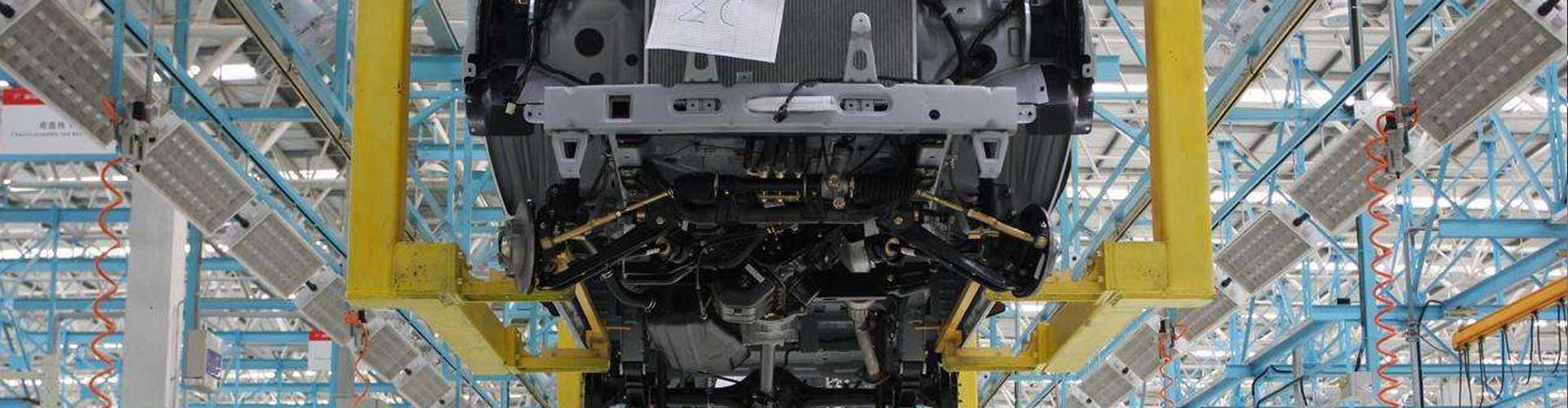
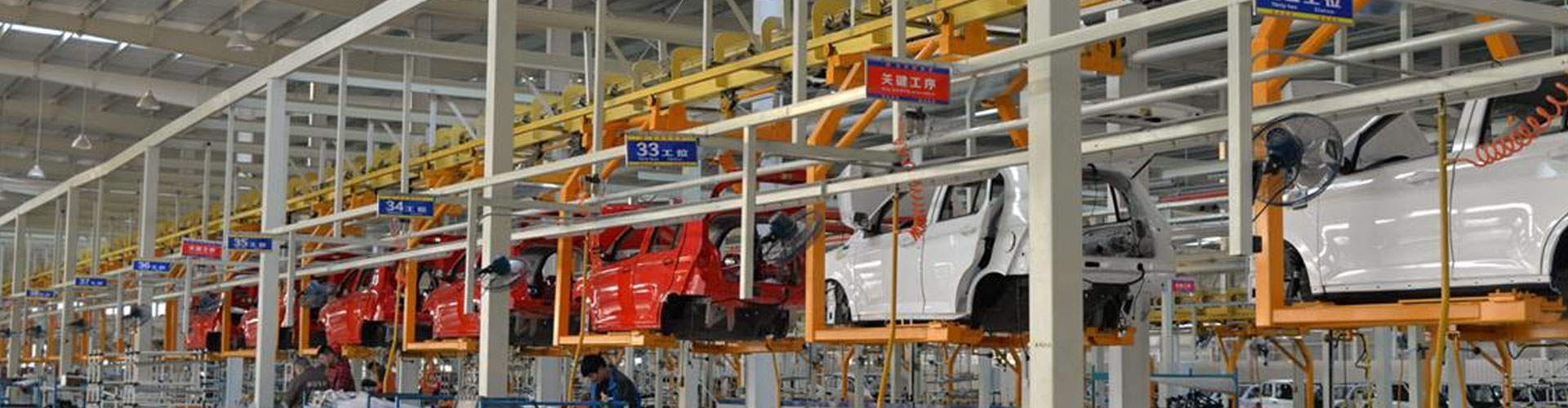
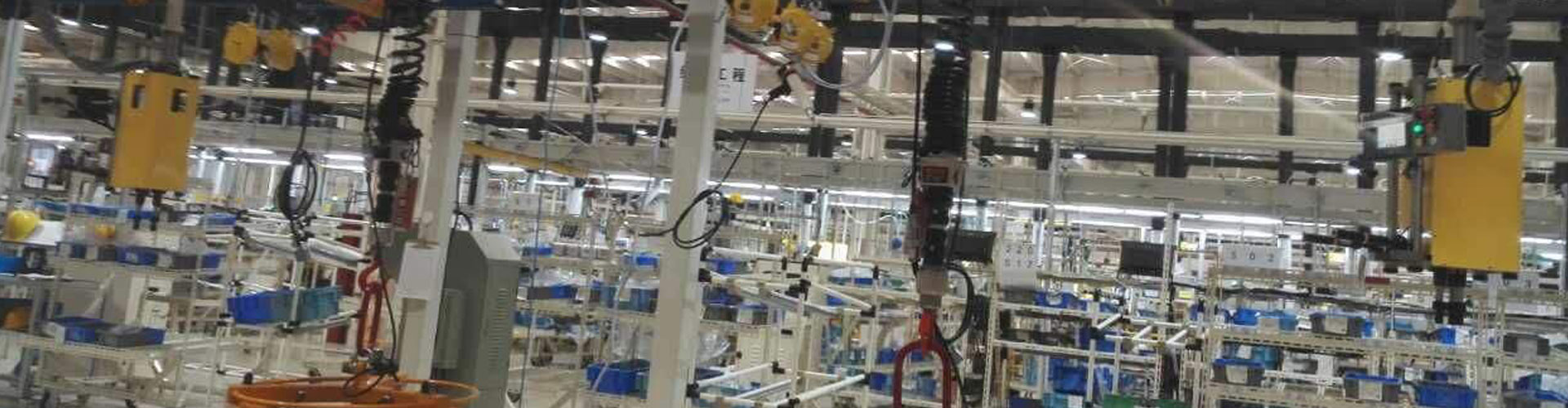
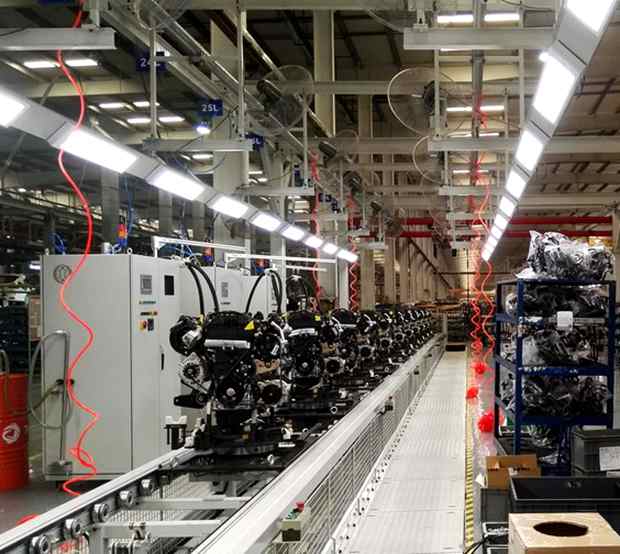
The automotive engine assembly line significantly enhances production efficiency and product quality by introducing technologies such as automated assembly, intelligent inspection, data-driven management, and human-machine collaboration, thereby comprehensively replacing the inefficient traditional manual model.
As the core component of a vehicle, the assembly quality of an automotive engine is critical. To meet market competition and technological development, companies are upgrading their production lines using automation and intelligence. This is specifically reflected in the following four aspects:
Automated Assembly Equipment
Robots and automatic control systems are utilized to replace manual operations, achieving automatic parts picking, precise positioning, installation, and commissioning. This not only significantly improves assembly speed and accuracy, reducing human error, but also allows for flexible adaptation to the production requirements of different engine models by quickly switching molds through preset programs.
Intelligent Inspection Equipment
Abandoning the inefficient traditional method of manual visual and operational inspection, this approach adopts equipment integrated with advanced sensors and image recognition technology. For example, infrared thermometers are used to monitor temperature distribution in real-time, or high-precision cameras are paired with image processing software to automatically identify surface defects, thereby achieving high-precision and efficient quality control.
Data-Driven Management System
To solve the problem of information barriers caused by traditional manual coordination, the system integrates and shares operational data from various equipment to achieve real-time monitoring and fault diagnosis of the production line. This system can not only quickly identify and address faults to reduce downtime but also analyze production data to optimize process parameters, further enhancing efficiency and quality.
Human-Machine Collaborative Cooperation
Against the backdrop of increased automation, the role of workers has shifted from arduous operations to monitoring and management. With the aid of artificial intelligence and machine learning, robots can perceive their environment through visual recognition to avoid harming humans, and inspection equipment can also learn autonomously to enhance diagnostic capabilities. This collaborative model not only reduces labor intensity but also improves the safety and reliability of production.
Previous: 5 Key Steps in Electric ...
Next: What equipment is there ...